FIELD ETHICS
My wildlife photography standards evolved through volunteer work at a wildlife hospital and countless field hours. I’m grateful to mentors who helped me become a more thoughtful and careful photographer.
 Certified Community Active Wildlife Steward (Oct 2022) – in recognition of ethical practices
Member NANPA Ethics Committee (2016 – 2020)
CONSERVATION

I have a particular interest in urban-wildlife intersections — the ways wild animals manage to exist or thrive alongside us in our structured environments.
One of my favorite themes is reclamation and resilience — how nature can restore itself when given the opportunity.
PERSONAL GUIDELINES
• As a former member of the NANPA Ethics Committee, I use the NANPA Ethics Guidelines and the Audubon Guide to Ethical Photography as models.
• I photograph with long lenses and a teleconverter (m.zuiko: 150-600mm, 100-400mm, 300mm f/4)
• I don’t bait or lure wild animals like owls or foxes (Note: these practices are not legal in many areas)
• I don’t use calls or decoys
• I’m extra cautious about nesting/denning areas (see below)
• In macro photography, I don’t stage or move animals or use artificial elements
• I photograph in natural light only (no flash)
• I protect locations of vulnerable wildlife (see below)
NESTS + DENS
I’m hyper cautious about nesting/denning areas. Some sites like urban heron rookeries or other protected areas can be safely photographed, depending on the setting.
Human presence near nests or dens can be harmful by interrupting feeding and protective behavior. And, in worst-case scenarios, it can lead to endangerment or death of babies. Humans can create scent trails for predators or alert predators to the presence of a nest. Even pointing a lens can draw unwanted attention from observant predators.
PROTECTING LOCATIONS
I’m protective of the wildlife I photograph, and generally don’t post specific locations. I don’t reveal locations of charismatic birds like owls which are relentlessly pursued once locations are known. I also avoid posting wildlife locations during hunting season if the species is considered a target or trophy animal.
ANTHROPOMORPHISM
Wild animals have unique entitlement to their own lived experience, intelligence, and emotions which I can only observe and interpret, imperfectly.
POST-PROCESSING
With most of my images, I apply standard edits to RAW files: exposure, contrast, sharpening, tone curves. I will sometimes apply selective exposure (dodge/burn) and noise reduction (including Lightroom’s Denoise). I don’t add or remove elements. If I’ve altered an image beyond standard for artistic or other purposes, I’ll make note of it in the caption.
STRICT ETHICS WITH SEA OTTERS
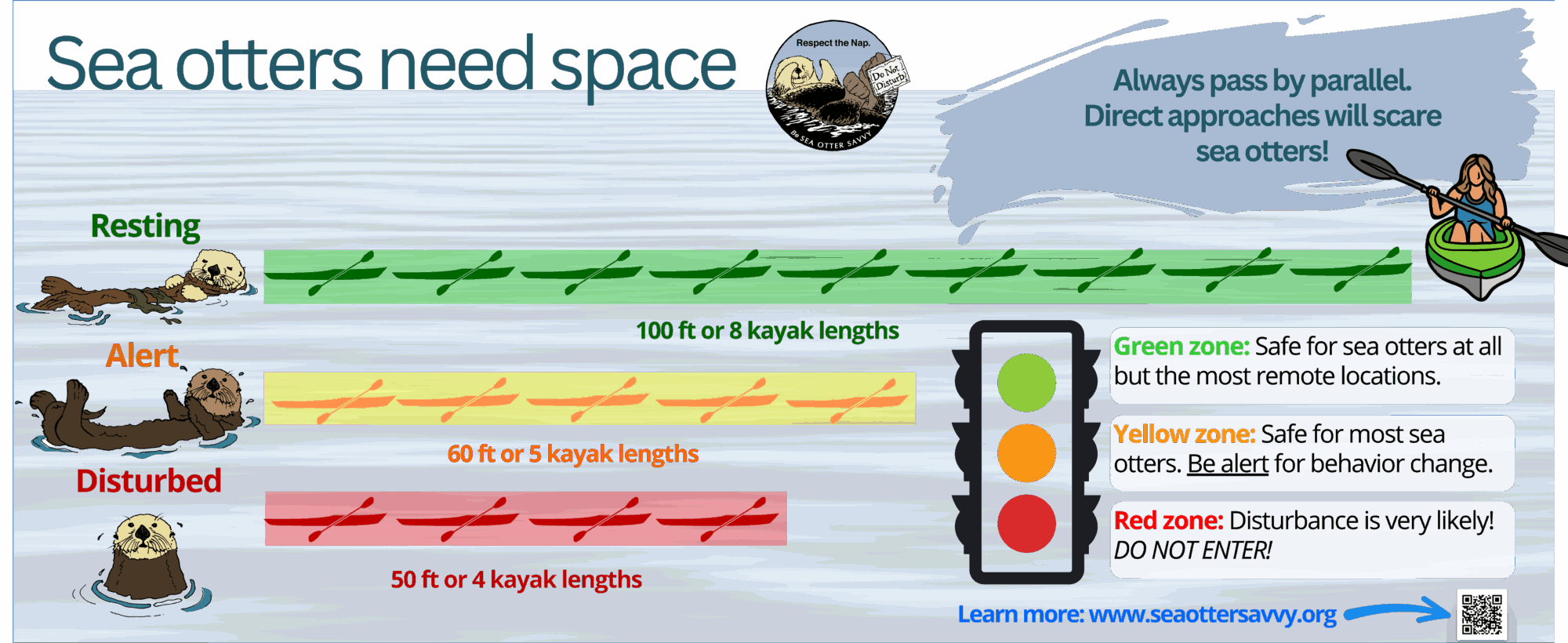
If you’re on California’s Central Coast or where sea otters are present, please do not disturb them (from water or shore). Southern sea otters are threatened, and human disruption causes significant problems.
Observation guidelines: Be Sea Otter Savvy